
Is sexting cheating? Of course, it is! Truth be told, I was shocked by such a blatant Google query.
For any monogamous relationship, sexting with anyone who is not your partner would qualify as cheating.
However, in the case of open relationships or ethical non-monogamy, sexting would be fine, depending on individual relationship boundaries.
Having said that, it is also important to note that, even in ethical non-monogamous relationships, there are boundaries – crossing them would qualify as cheating.
That is to say, the generally accepted logic behind what constitutes cheating.
Having said that, I’ve seen how this question ruins a surprising number of relationships for something that technically happens through a phone screen.
That is part of why people argue about it so intensely. Because, unlike traditional cheating, sexting lives in a weird space where:
- Nothing physical happened.
- Nobody met in person.
- There may not even be feelings involved.
And yet for many people, discovering sexual messages between their partner and somebody else feels every bit as painful as physical cheating.
Sometimes worse, especially because sexting usually involves something deeply personal: Attention, and not random attention either.
In my experience, I’ve seen that sexual attention is directed outside the relationship intentionally.
And honestly, most people instinctively understand why that changes things emotionally.
So, Is Sexting Cheating?

For most people, yes.
Sexting is generally considered a form of cheating because it involves sexual intimacy, secrecy, and intentional sexual interaction with somebody outside the relationship.
And this is true, even if nothing physical happens. That last part is what confuses people.
Some assume cheating only “counts” once physical boundaries get crossed in real life. But relationships are not built only around physical exclusivity anymore.
Also, you can’t ignore that modern intimacy includes:
- emotional loyalty,
- digital behavior,
- private communication,
- sexual attention, and
- emotional boundaries.
And sexting crosses several of those at once, especially when it is hidden.
Having said that, the reality is far from different. Slater & Gordon is a law firm that commissioned a survey sometime back featuring 2,150 participants (source: Vice Media)
As per the survey, while 49% women said sexting is cheating, 35% men didn’t find anything wrong in sending sexual messages.
Why Sexting Feels So Personal?
This is because sexting is not passive.
For instance, watching a movie is passive, and so is scrolling on social media. However, sexting requires participation.
Somebody is actively:
- flirting sexually,
- building tension,
- exchanging intimate messages,
- directing sexual energy elsewhere, and
- creating private intimacy.
That intentionality matters emotionally, and that too a lot. People often try to minimize sexting by saying, “It was just messages.”
But emotionally, those messages usually represent:
- desire,
- excitement,
- secrecy,
- validation,
- fantasy, and
- intimacy.
And this is precisely why partners react strongly once they discover it.
“But We Never Met” Usually Does Not Help Much:
This defense appears constantly in sexting arguments. And technically, yes, physical cheating may not have happened.
But for many people, the betrayal started long before physical contact ever became relevant because the issue is not only physical behavior.
Instead, it is the willingness to create hidden sexual intimacy with somebody else while still expecting trust inside the relationship.
That contradiction is what damages people emotionally, especially because sexting rarely feels accidental.
Nobody accidentally sends explicit messages for three weeks straight.
If you ask for my two cents on it, I’m just going to ask you to dump them and move on – because if they can ‘sext’ with someone, they can also sleep with them.
TBH, I remember once upon a time when I was single. I was texting this guy at work for weeks without any clue about his relationship status.
Eventually, we sexted a few times – and it was so good, we met the next week and did the act in real life.
One day later, I found out that he was already engaged – yeah, that was the single most embarrassing and humiliating moment of my life.
Emotional Vs Physical Cheating:
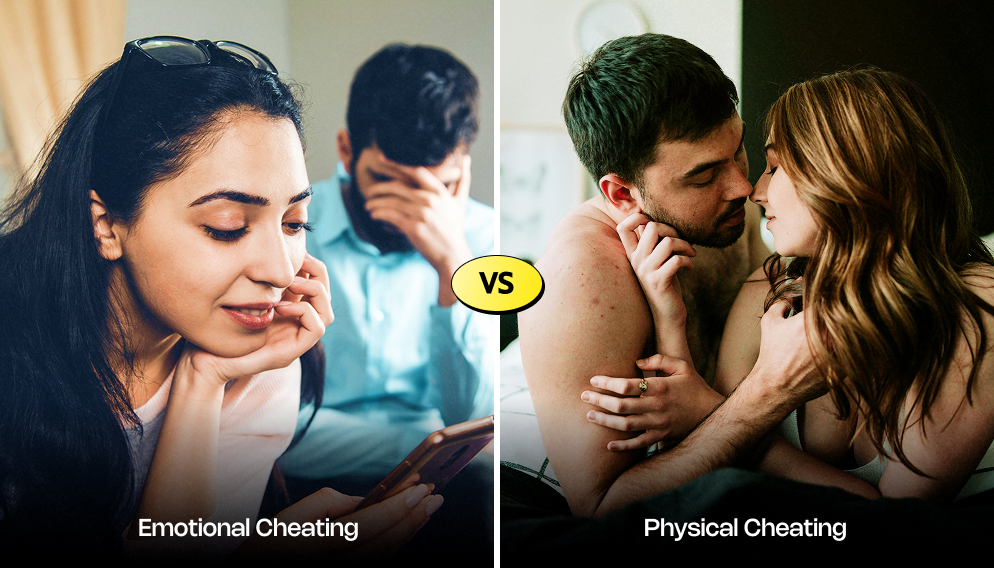
Sexting usually sits somewhere between both.
It is not fully emotional cheating in every case because deep emotional attachment may not exist. But it is also not emotionally neutral.
And while physical touch may not happen, the sexual interaction itself is still real.
That is why many people see sexting as a form of sexual cheating, even if physical meetings never happen.
Moreover, to be fair, the brain does not separate digital intimacy from ‘real’ intimacy as cleanly as people pretend.
Frankly, excitement is still excitement, desire is still desire, and secrecy is still secrecy.
Modern Relationships Changed The Conversation Completely:

A generation ago, cheating conversations mostly revolved around physical affairs.
Now people carry private messaging apps, disappearing chats, hidden folders, social media DMs, dating apps, encrypted conversations, and more.
And that too inside their pockets permanently. Which means sexual boundaries became more digital, too.
Plus, honestly, technology made emotional and sexual access to strangers incredibly easy.
As a result, people no longer need bars, hotels, or secret meetings. Now, inappropriate intimacy can develop during work hours, late at night, and even while lying beside a partner in bed.
That accessibility changed the relationship trust permanently.
Is Sexting Cheating? Not Really!
This matters too. And I spoke about this early on in my article.
Not every relationship defines boundaries the same way. Some couples genuinely have open relationships, flexible sexual boundaries, and consensual online behavior agreements.
Also, others separate fantasy from betrayal differently. The problem is that many couples never discuss digital boundaries clearly beforehand.
Instead, people assume that their definition of loyalty is obvious. But usually, it is not.
That is why one partner may see sexting as harmless flirting while the other experiences it as devastating betrayal.
The Secrecy Usually Reveals The Truth:
Honestly, this is the biggest clue in most situations.
So, just take a moment and ask:
- Was it hidden?
- Were messages deleted?
- Would the behavior continue openly in front of the partner?
- Did somebody panic when discovered?
Because people generally know when they are crossing emotional relationship boundaries. That is why secrecy almost always appears alongside sexting.
The hiding becomes part of the betrayal itself.
Why People Sext Outside Relationships?
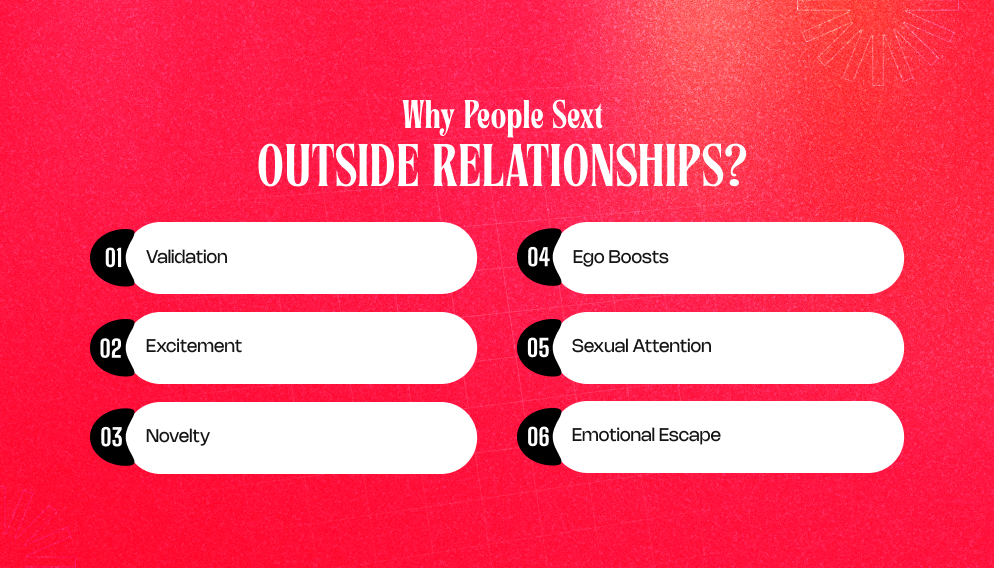
The reasons vary, but a few patterns show up constantly. As a result, sometimes people want:
- validation,
- excitement,
- novelty,
- ego boosts,
- sexual attention, and
- emotional escape.
Then, at other times, relationships already feel emotionally disconnected, and outside attention becomes addictive quickly.
And honestly, some people simply enjoy the thrill of being desired by someone new without fully considering the emotional consequences.
Frankly, human behavior becomes messy once attention and secrecy combine.
Can Sexting Ruin Relationships?
Absolutely, yes! If my boyfriend found out I was sexting with another man behind his back, he would be heartbroken. And would eventually end things with me, no doubts about that.
Not always because of the sexual messages alone, but because sexting often destroys trust very quickly.
Once discovered, people start questioning:
- emotional honesty,
- online behavior,
- hidden conversations,
- social media interactions,
- deleted chats, and
- digital privacy.
Also, rebuilding trust around private phone behavior becomes incredibly difficult afterward, especially because phones now contain huge portions of people’s emotional lives.
Can Relationships Recover After Sexting?
Sometimes. But recovery usually depends on:
- honesty,
- accountability,
- transparency,
- willingness to rebuild trust, and
- understanding why it happened.
Moreover, the biggest issue is that sexting often reveals deeper problems underneath:
- emotional disconnection,
- validation seeking,
- intimacy issues,
- hidden resentment, and
- boundary confusion.
Also, fixing the messages alone does not automatically fix the relationship dynamics underneath them.
Is Sexting Worse Than Physical Cheating?
This depends entirely on the person.
While some people view physical cheating as the ultimate betrayal, no matter what, others honestly feel more disturbed by prolonged sexual secrecy, emotional investment, and hidden intimacy than by one impulsive physical mistake.
There is no universal emotional ranking system for betrayal. In fact, different people experience different boundaries as more painful.
So, is sexting cheating? For most relationships, yes.
Because sexting usually involves intentionally directing sexual attention, intimacy, and secrecy toward somebody outside the relationship.
And honestly, most people already know that instinctively. That is why the behavior gets hidden in the first place. Not because people are confused about whether it might hurt their partner. But because deep down, they already understand it probably will.