What is emotional cheating? Well, frankly, I’ve only one thing to say, in this context, “when you know, you know.”
You just know there is someone else, and yes, your gut knows much before your head finds out.
Most emotional cheating does not start with romance. And that is what makes it dangerous.
Moreover, nobody wakes up one morning and announces, “I think I’ll slowly destroy my relationship through emotionally confusing text conversations.”
Usually, it starts with something that feels harmless.
A coworker becomes the person you vent to during lunch breaks – he is just your work husband, and that’s fine until you start prioritizing them over your actual partner.
Then, somebody online starts understanding you a little too well.
For starters, a “friendship” slowly becomes the first place you go when something good happens or bad happens. Or, honestly, when anything happens.
And somewhere in the middle of all that, emotional intimacy quietly changes direction.
That is emotional cheating. And it’s not always physical, not always obvious. But still powerful enough to wreck relationships completely.
I know it sounds super messy, and for me this is something I’ve been planning to write about for sometime now.
But infidelity is a messy topic, and I don’t like discussing it usually. However, I can’t ignore it any longer – so here I am with my no-filter guide on where to draw the line!
Stay tuned.
What Is Emotional Cheating?
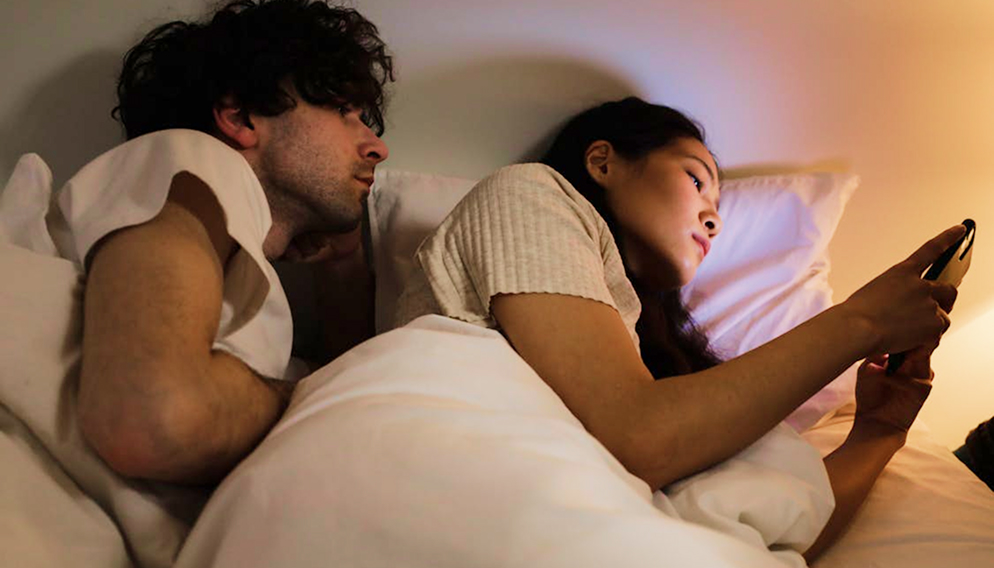
Emotional cheating happens when somebody builds a level of emotional closeness, dependence, or intimacy with another person that starts competing with the relationship itself.
Moreover, the difficult part is that there is rarely one clear moment where the line gets crossed.
That is why people argue about it constantly, because technically:
- Maybe nothing physical happened.
- Maybe the messages looked innocent.
- Or, maybe they were “just friends.
- Also, maybe nobody said, “I love you.”
But emotionally, the relationship had already started shifting somewhere else. And honestly, people usually feel that shift before they can explain it properly.
Why Emotional Cheating Hurts So Much?
Because relationships are not built only on physical loyalty. Instead, they are built on emotional priority, too.
A lot of people can survive attraction to other people. Moreover, humans are not robots, and attraction happens everywhere – that part is normal and acceptable.
But what really hurts is realizing somebody else slowly became:
- An exciting conversation.
- An emotional comfort.
- A daily habit.
- A safe space.
- The person is getting all the emotional energy.
And all this happens while the actual relationship starts surviving on leftovers. That feeling messes with people deeply.
Especially because emotional cheating often comes with constant denial: “We are literally just talking,” which somehow makes everything more frustrating.
Signs Of Emotional Cheating:
This is usually where people start replaying old conversations in their head.
Not every close friendship is emotional cheating. Frankly, that distinction matters.
Of course, people should absolutely be allowed to have friendships, emotional support systems, and lives outside relationships.
But emotional cheating usually has a certain emotional texture to it. In fact, you can feel when a connection starts becoming too emotionally charged.
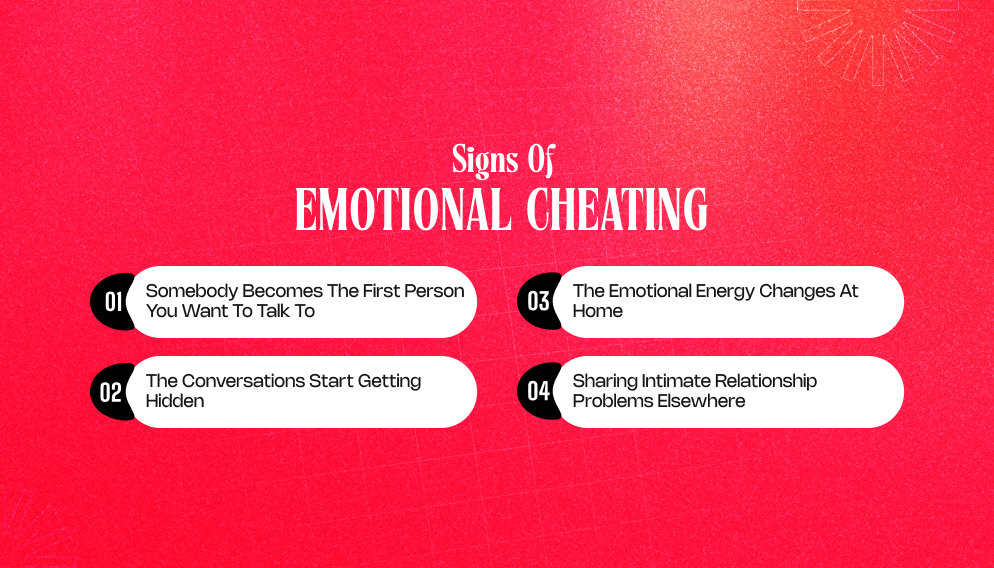
1. Somebody Becomes The First Person You Want To Talk To:
This is one of the biggest signs.
Good news? They hear it first. Bad day? You message them first. Also, something funny happens? Your instinct immediately goes toward them instead of your partner.
That emotional reflex matters more than people think because intimacy is often built through repetition, not dramatic moments.
2. The Conversations Start Getting Hidden:
Secrecy changes everything.
So, a friendship that people openly mention usually feels very different from one constantly hidden behind:
- Deleted chats.
- Muted notifications.
- Turned-over phones.
- Vague explanations.
- “You’re overthinking it.”
Moreover, people rarely hide interactions they genuinely believe are harmless. That is the uncomfortable truth behind a lot of emotional cheating situations.
3. The Emotional Energy Changes At Home:
This part usually happens slowly.
Somebody becomes emotionally animated while texting another person, but is distant inside the relationship itself.
Moreover, conversations at home feel flatter, attention shifts elsewhere, and emotional availability drops without anybody directly admitting why.
And honestly, partners notice this faster than people realize. TBH, humans are very good at sensing where emotional energy goes once patterns change.
4. Sharing Intimate Relationship Problems Elsewhere:
This one gets messy very quickly.
So, there is a difference between normal advice from friends and building emotional intimacy through constant relationship venting with one specific person.
Because vulnerability creates closeness extremely fast, and this is especially when the outside person becomes the source of comfort and validation.
And not just that, gradually, the other person becomes the understanding voice and, more importantly, the emotional escape.
That dynamic slides into emotional cheating more often than people want to admit.
You May Also Check: What Is Micro Cheating? (And Where You Should Draw A Line?)
Emotional Cheating Vs Physical Cheating:
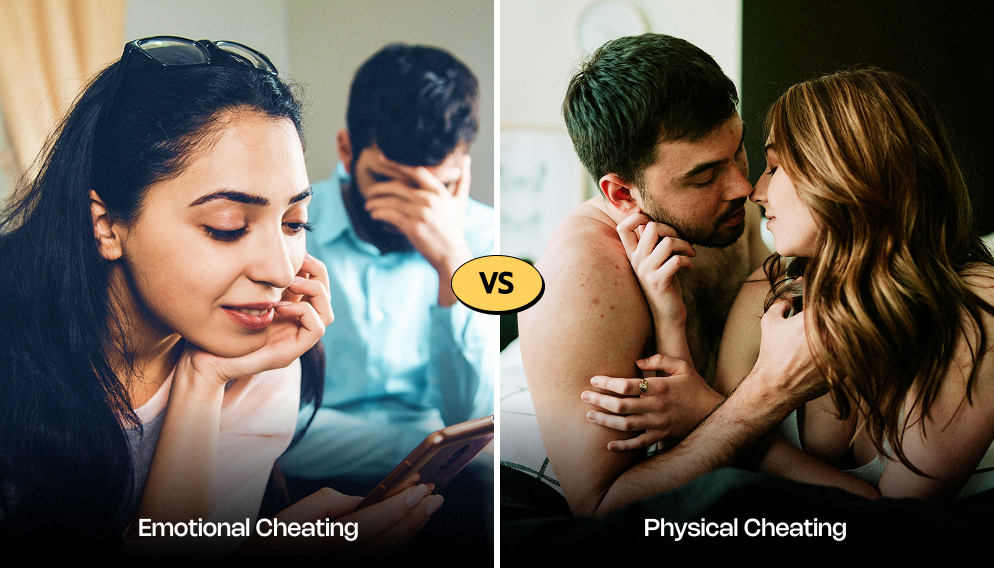
This debate never ends because people experience betrayal differently.
Some people believe physical cheating is worse because it crosses an obvious line immediately, while others honestly find emotional cheating more painful because it feels deeper.
Of course, physical attraction can happen impulsively. In contrast, emotional cheating usually develops over time.
The attention gets redirected slowly. Moreover, emotional intimacy builds piece by piece.
Suddenly, somebody becomes psychologically important before anybody admits what is happening. And that long-term emotional investment is exactly what makes it feel devastating.
Also, for some people, discovering months of hidden emotional attachment hurts more than one physical mistake ever could.
Can Emotional Cheating Happen Online?

At this point, online emotional cheating is probably more common than offline emotional cheating.
Modern relationships exist inside phones now. As a result, it is normal for people to build emotional intimacy through:
- Instagram DMs.
- Snapchat.
- Discord.
- Gaming chats.
- Work Slack messages.
- Private late-night conversations.
- “Harmless” texting.
And because nothing physical happens initially, people convince themselves it does not count.
But emotional attachment does not care whether conversations happen in person or through a screen.
Frankly, the brain still forms excitement, anticipation, emotional dependence, attachment, and intimacy
Technology simply made emotional access permanent.
Why People Emotionally Cheat?
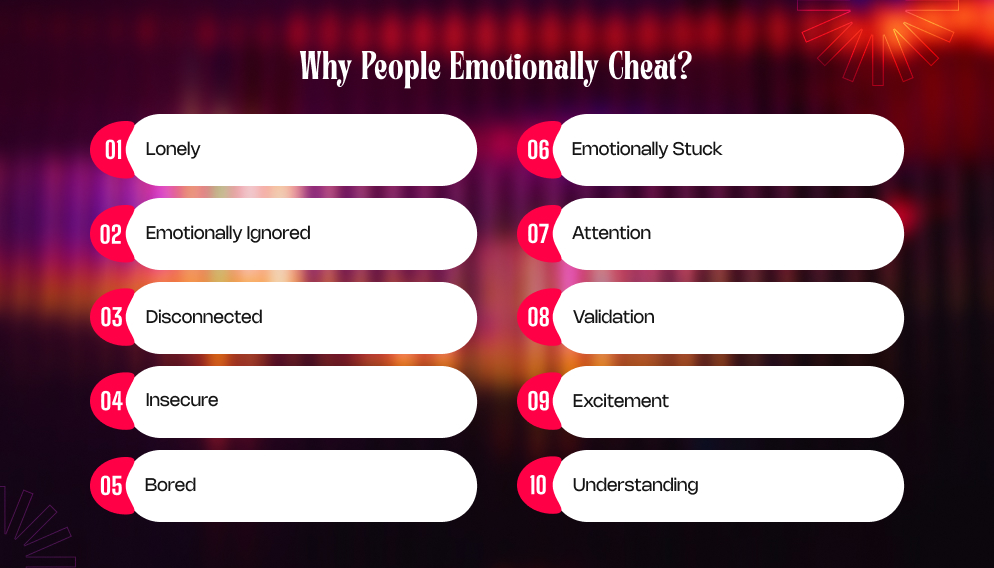
Usually, emotional cheating starts long before somebody consciously labels it that way.
Sometimes people feel:
- Lonely.
- Emotionally ignored.
- Disconnected.
- Insecure.
- Bored.
- Emotionally stuck.
And then somebody else enters their life offering:
- Attention.
- Validation.
- Excitement.
- Understanding.
- Emotional relief.
That combination becomes addictive very quickly.
Other times, people simply enjoy feeling emotionally desired outside the stability of their relationship. Which sounds harsh, but it is true more often than people admit publicly.
Also, validation is powerful, especially when relationships become routine.
The Problem With Emotional Cheating Is The Ambiguity:
Physical cheating feels easier to define. But emotional cheating lives in gray areas. That is why couples argue about it so intensely.
While one person thinks, “This is clearly inappropriate,” the other thinks, “We are just close.”
And honestly, both people sometimes believe they are being reasonable.
Also, that ambiguity creates chaos because emotional boundaries are deeply personal. Every relationship defines loyalty slightly differently.
Can Relationships Recover After Emotional Cheating?
Sometimes.
But emotional cheating damages trust in a very specific way because it creates paranoia around emotional honesty itself.
Moreover, after discovery, people start questioning every friendship, every notification, every hidden screen, every “just a friend,” and every emotional withdrawal.
As a result, rebuilding that trust takes a long time because emotional betrayal rarely feels fully measurable.
TBH, you cannot neatly quantify intimacy. And that is what makes recovery difficult – Not impossible, but difficult.
Also, at its core, emotional cheating happens when somebody starts giving emotional intimacy, energy, attention, and connection to another person in ways that quietly compete with the relationship itself.
That is why the topic makes people uncomfortable. Because emotional cheating usually does not begin with bad intentions. It begins with emotional closeness; people fail to stop once it starts feeling important.
More Helpful Read: Emotionally Unavailable: What It Means And How To Deal With It?