
What is emotional intimacy? A lot of people enter relationships thinking attraction will automatically create closeness. At first, it sometimes feels true.
The conversations are exciting. You want to know everything about each other. Hours disappear while talking. And even the most ordinary interactions feel emotionally charged somehow.
Then real life slowly arrives – Work stress, routine, responsibilities, emotional fatigue, and miscommunication.
Moreover, in my experience, I’ve seen that the distance nobody notices forms immediately – it slowly enters your life and stands in a corner waiting, ensuring all’s good.
And suddenly, two people who technically still love each other start feeling emotionally disconnected underneath the relationship.
That shift confuses people because nothing dramatic necessarily happened – Nobody cheated, nobody disappeared.
There was no giant betrayal scene from a movie. But emotionally, the relationship still starts feeling:
- quieter,
- colder,
- more filtered,
- less emotionally safe, and
- strangely lonely despite constant interaction.
That is usually where emotional intimacy enters the conversation because emotional intimacy is often the difference between being around someone and actually feeling emotionally connected to them.
On that note, I thought, why not discuss emotional intimacy – but with brutal honesty – and breakdown why we feel so deeply connected in some relationships, while others fade out over time.
Stay tuned.
What Is Emotional Intimacy?
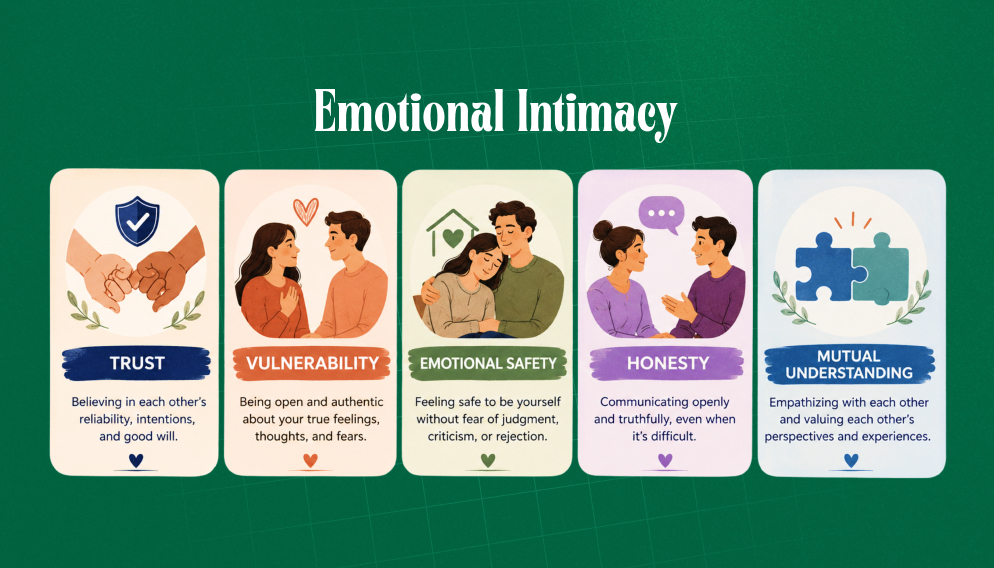
Emotional intimacy is a close emotional connection built through trust, vulnerability, emotional safety, honesty, and mutual understanding.
It happens when people feel comfortable sharing thoughts, fears, insecurities, emotions, needs, and personal experiences.
Of course, intimacy develops between two people because you feel like you can share anything with them without constantly fearing judgment, rejection, or ridicule.
In simple terms, emotional intimacy is what makes somebody feel emotionally safe enough to be fully themselves around another person.
Not the polished version or the socially acceptable version. But the real version. And honestly, that level of emotional safety becomes rarer in adulthood than people expect.
What Does Emotional Intimacy Look Like?
Emotional intimacy does not always look dramatic. This is one reason people misunderstand it constantly.
Movies portray intimacy through giant emotional speeches and dramatic moments in the rain. But real emotional intimacy usually looks much quieter than that.
Sometimes it looks like:
- Somebody omebody notices your mood before you explain it.
- Feeling emotionally safe enough to cry openly.
- Being honest about insecurity without feeling embarrassed.
- Talking about fears without immediately getting dismissed.
- Feeling listened to instead of analyzed.
- Someone remembers emotional details you barely mentioned.
Also, tiny moments matter enormously here.
For instance, it can look like a partner quietly asking, “You’ve seemed emotionally exhausted lately. Are you okay?”
And this moment can create more emotional closeness than expensive romantic gestures sometimes, because emotional intimacy is less about performance and more about emotional safety.
Why Emotional Intimacy Matters So Much In Relationships?

Because humans usually want more than companionship.
At the end of the day, most people want emotional understanding, safety, connection, consistency, and somebody who genuinely knows them internally.
As a result, without emotional intimacy, relationships often become functional instead of emotionally fulfilling.
In my experience, I’ve seen people continue to live together, text each other, handle responsibilities, maintain routines, and spend time together.
But emotionally, something underneath starts feeling missing – Conversations become logistical, vulnerability decreases, and people stop sharing parts of themselves naturally.
Then, eventually, somebody says, “I don’t feel close to you anymore.” And the other person feels confused because, technically, nothing major changed externally.
But emotional intimacy often fades internally long before relationships physically end.
Signs Of Emotional Intimacy In A Relationship:
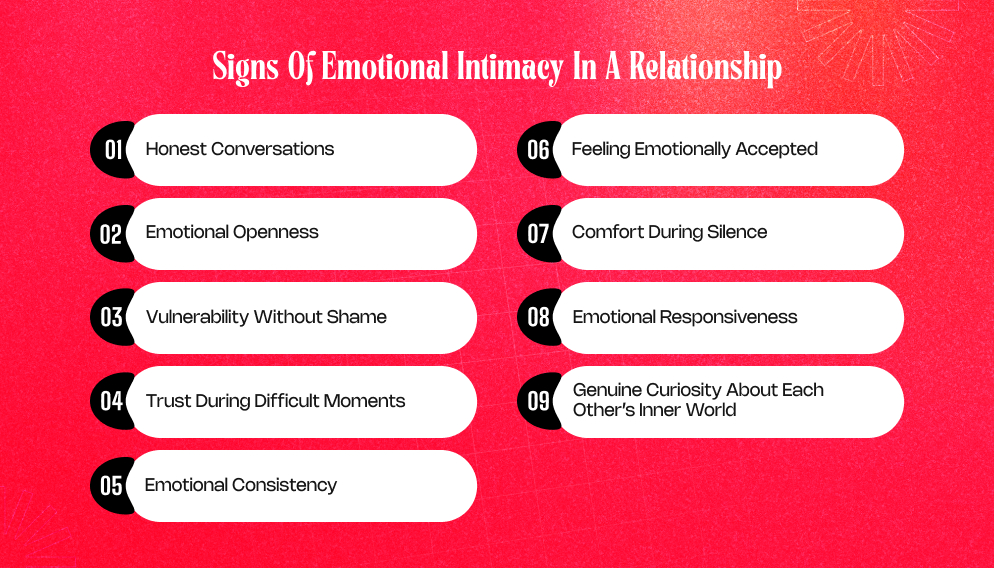
People search for this constantly because emotional intimacy can feel hard to define until its absence becomes obvious.
And I’ve been there.
In deeply unfulfilling romantic relationships, you will find yourself up late in the night, reading through blogs on Google, trying to figure out what’s happening to your love life.
Usually, emotionally intimate relationships include:
- honest conversations,
- emotional openness,
- vulnerability without shame,
- trust during difficult moments,
- emotional consistency,
- feeling emotionally accepted,
- comfort during silence,
- emotional responsiveness, and
- genuine curiosity about each other’s inner world.
So, one of the biggest signs is emotional ease – you stop feeling like every emotion must be carefully filtered before speaking honestly.
That emotional relaxation matters more than people realize.
What Emotional Intimacy Looks Like In Daily Life?

This matters because people often imagine intimacy too abstractly. So, real emotional intimacy usually appears through ordinary interactions repeatedly over time.
On that note, here are some examples of how emotional intimacy can look in daily life.
- texting someone first when something emotional happens,
- feeling emotionally calmer after talking to them,
- being able to admit insecurity honestly,
- discussing difficult topics without fear,
- feeling emotionally supported during stressful periods,
- knowing disagreements will not automatically threaten the relationship, and
- feeling emotionally understood without explaining every detail repeatedly.
Sometimes, emotional intimacy is simply feeling emotionally safe enough to stop pretending constantly.
That is a bigger deal than many people realize.
Emotional Intimacy Vs Physical Intimacy:
People constantly confuse these.
While physical intimacy involves affection, touch, and physical closeness, emotional intimacy is psychological closeness.
And honestly, relationships struggle badly when one exists without the other.
Some relationships have intense physical chemistry but almost no emotional vulnerability underneath. Others feel emotionally close, while physical connection weakens over time.
However, the healthiest long-term relationships are usually built together gradually.
Because attraction may create excitement initially, but emotional intimacy is often what makes people feel emotionally secure long-term.
Emotional Intimacy In Long-Term Relationships:
This becomes increasingly important over time.
Early relationships often survive through novelty, chemistry, attraction, and emotional excitement.
But eventually, ordinary life takes over. And ordinary life is not always romantic.
Moreover, almost always, people become:
- stressed,
- tired,
- overwhelmed,
- emotionally distracted,
- financially pressured, and
- mentally exhausted.
During those periods, emotional intimacy becomes the thing helping people still feel emotionally connected underneath routine life.
Without it, couples often slowly become co-managers of responsibilities. Not emotionally connected partners.
And honestly, that transition happens more quietly than most people expect.
Why Some People Struggle With Emotional Intimacy?
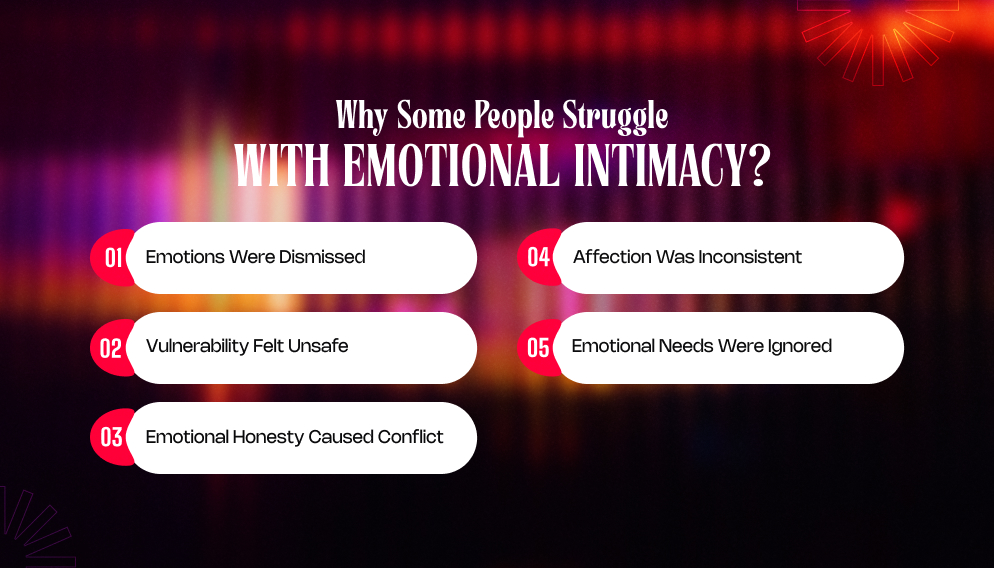
Not everybody learned emotional openness growing up. Some people were raised in environments where:
- emotions were dismissed,
- vulnerability felt unsafe,
- emotional honesty caused conflict,
- affection was inconsistent, and
- emotional needs were ignored.
So emotional self-protection becomes automatic, even inside healthy relationships. And that can look like:
- shutting down emotionally,
- avoiding vulnerability,
- joking instead of opening up,
- becoming defensive quickly,
- avoiding difficult conversations, and
- Struggling to express emotional needs.
Also, often the person themselves does not fully realize how emotionally guarded they have become over time.
Fear Of Emotional Intimacy Is More Common Than People Think:
A lot of emotionally distant behavior is actually fear disguised as independence because emotional intimacy requires exposure.
Once somebody truly knows you emotionally:
- Rejection feels more painful.
- Criticism feels more personal.
- Emotional abandonment feels more threatening.
So some people unconsciously avoid deep emotional closeness altogether, not because they do not care.
But because vulnerability itself feels emotionally dangerous. And that creates relationships where people stay emotionally guarded, surface-level, and partially disconnected.
And this happens even while wanting a connection deeply underneath.
What Destroys Emotional Intimacy?
Usually not one dramatic moment. Instead, it fades through accumulation thanks to small things like:
- unresolved resentment,
- emotional neglect,
- dishonesty,
- criticism,
- emotional inconsistency,
- repeated misunderstanding,
- lack of emotional availability, and
- feeling emotionally ignored.
People naturally stop opening up once vulnerability stops feeling emotionally safe. That is important.
Moreover, humans emotionally protect themselves automatically after repeated emotional disappointment.
So eventually the conversations become smaller, emotional honesty decreases, vulnerability disappears, and emotional distance quietly grows.
Also, sometimes couples barely notice it happening until the relationship already feels emotionally hollow.
Emotional Intimacy And Communication:

Good communication alone does not automatically create emotional intimacy. But poor communication destroys it very quickly, especially communication patterns involving:
- defensiveness,
- dismissiveness,
- emotional invalidation,
- constant criticism,
- sarcasm during vulnerability, and
- emotional withdrawal.
Emotionally intimate people usually feel emotionally heard, not emotionally managed. That difference matters enormously.
Sometimes people are technically “communicating” constantly, while emotionally understanding each other very little.
Emotional Intimacy In Marriage:

Marriage often exposes emotional intimacy problems more clearly because long-term routines eventually remove the excitement that initially masked emotional disconnection.
That is why some married couples slowly start feeling emotionally distant despite:
- sharing a home,
- raising children, and
- spending years together.
Moreover, they may still function extremely well operationally.
But emotionally vulnerability decreases, conversations shrink, emotional curiosity disappears, and emotional attention weakens.
Then, eventually, the relationship starts feeling emotionally transactional instead of emotionally connected.
This is also why emotionally intimate marriages often feel calmer and safer underneath daily stress.
As a result, the relationship becomes an emotional support system instead of just a logistical partnership.
Can Emotional Intimacy Exist Without Romance?

Absolutely. I mean, this is something people tend to judge always – oh, how can you be so intimate with someone you are just friends with?
Because intimacy isn’t always ‘romantic’ – it can be platonic as well! As a result, you will see that emotional intimacy exists in:
- friendships,
- sibling relationships,
- family dynamics, and
- deep platonic connections.
This is because emotional intimacy is ultimately about trust, openness, emotional safety, understanding, and most importantly, emotional closeness – not romance itself.
Also, some friendships honestly contain stronger emotional intimacy than certain romantic relationships do. And people usually feel that difference very clearly.
Emotional Intimacy Vs Emotional Dependency:
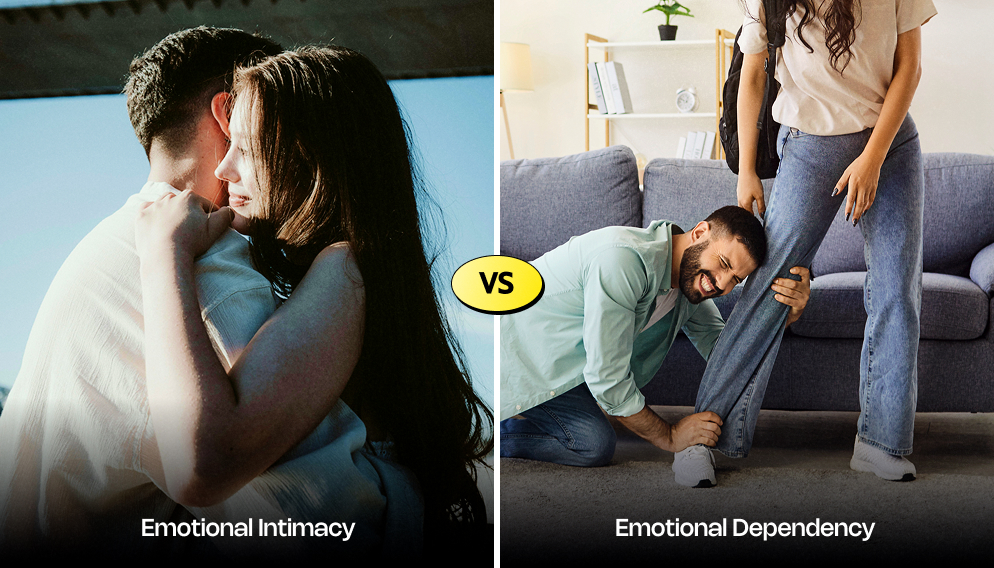
This distinction matters.
Emotional intimacy is healthy emotional closeness. In contrast, emotional dependency happens when somebody’s emotional stability becomes completely reliant on another person constantly.
Moreover, healthy emotional intimacy still allows:
- individuality,
- independence,
- personal identity, and
- emotional boundaries.
But in contrast, dependency often creates emotional panic, possessiveness, fear-based attachment, and emotional imbalance.
Also, people confuse the two sometimes because both involve emotional closeness, but emotionally healthy intimacy still leaves room for emotional stability individually.
Emotional Intimacy And Emotional Cheating:

This conversation appears more now because emotional intimacy can develop outside relationships, too.
Sometimes people slowly build emotional closeness with somebody else through:
- constant messaging,
- private emotional conversations,
- emotional venting,
- hidden vulnerability, and
- emotional dependence.
Then, emotional energy gradually shifts away from the actual relationship. That is where emotional cheating discussions begin.
Because emotional intimacy becomes extremely powerful once emotional vulnerability and emotional attention consistently move toward somebody outside the relationship, especially once secrecy enters the situation.
The Role Of Technology Behind Modern Emotional Intimacy:
Modern relationships now happen heavily through phones, too. Moreover, people emotionally connect through:
- texting,
- voice notes,
- video calls,
- late-night conversations, and
- constant digital communication.
That creates both stronger emotional accessibility and more emotional distraction.
Moreover, some couples communicate constantly digitally while barely connecting emotionally in person anymore.
Others build surprisingly deep emotional intimacy through consistent communication despite physical distance.
Of course, this was only normal considering technology amplified emotional access enormously, but it also created more emotional fragmentation.
You Can Also Check: What Is Micro Cheating? (And Where You Should Draw A Line?)
Emotional Intimacy In Long-Distance Relationships:
Long-distance relationships often rely heavily on emotional intimacy because physical intimacy becomes limited. That means communication quality matters much more.
TBH, emotionally healthy long-distance relationships usually involve:
- emotional consistency,
- vulnerability,
- reassurance,
- meaningful conversations,
- emotional transparency, and
- trust.
Without emotional intimacy, long-distance relationships often collapse quickly because physical presence alone cannot temporarily compensate for emotional distance.
Can Emotional Intimacy Return After Emotional Distance?

Yes. But usually not through one dramatic conversation.
In my experience, I have seen that you can build emotional intimacy is through repeated emotional consistency over time.
Plus, this definitely includes things like:
- honest communication,
- vulnerability,
- emotional accountability,
- emotional availability,
- listening properly,
- rebuilding trust slowly, and
- emotional curiosity returning again.
And honestly, rebuilding emotional intimacy often feels awkward initially because emotionally distant people become unfamiliar with openness over time.
But emotional closeness usually returns through small, emotionally safe moments repeated consistently.
Some Relationships Look Happy, But Lack Emotional Intimacy Completely
This is important because emotional disconnection rarely looks dramatic externally.
As a result, you will see even in the absence of emotional intimacy, couples still:
- travel together,
- live together,
- socialize together,
- post photos together, and
- maintain routines.
But emotionally, they already feel disconnected underneath everything else. That is why people sometimes say, “I felt lonely while still being in the relationship.”
They do not necessarily mean physical absence. Instead, they mean emotional absence. And emotional loneliness inside relationships often hurts differently because somebody is physically present, while emotional closeness still feels missing somehow.